Showing posts sorted by date for query Life on Mars. Sort by relevance Show all posts

Thursday, September 10, 2026

The bar as a neighborhood battleground: Max Wolf Friedlich and Hannah Getts on ‘The Holes'

Photos and interview by Stacie Joy 

A lot has happened since EVG last spoke with playwright Max Wolf Friedlich and dramaturg-producer Hannah Getts in 2024. 

Their play "Job" transferred from the East Village to Broadway, and the couple moved to Los Angeles. They're back in New York for a few months with "The Holes," a dark comedy now in previews at wild project, 195 E. Third St. between Avenue A and Avenue B. 

Set in a decaying bar in a rapidly gentrifying upstate city, the play explores the tensions between tradition and progress, community and individualism — themes that carry added resonance in the East Village. 

Hours before the first preview on Tuesday evening, we met with Friedlich, an NYC native who grew up doing theater in the East Village, and Getts in a nearby community garden to talk about the play's long evolution, bars as neighborhood living rooms, the changing city, and why staging the production at wild project feels like a homecoming.
A lot has happened with you since we spoke in 2024, including Broadway. What does it feel like to be back presenting a new play in a small East Village theater? 

Max: It feels so crazy to be saying this and meaning it, but it does feel like a homecoming. The wild project has been so amazing to us, and they've given us a key.

It feels like we have our own little spot, like a clubhouse. We love the neighborhood. We love eating in the neighborhood; we love hanging out in the neighborhood. 

"The Holes" is set in a decaying bar in a rapidly gentrifying city. That description obviously carries some extra resonance when you're staging the play in the East Village. Did you think about that when choosing wild project as its home? 

Max: An interesting question. I mean, the truthful answer is no, but... 

Hannah: We chose it very practically speaking. 

Max: It's just so hospitable to artists in a way that few... 

Hannah: There's no theater like wild project in New York. They are so artist-friendly, artist-first, and affordable to stage a work and rent the space. 

Max: They have great resources. 

Hannah: They do! They're so kind and communicative. All the things that check the boxes when you're doing independent art, which is already hard enough. To have great partners, who are such an institution in the neighborhood, is unbelievable. 

So practically speaking, they had availability, and they made extra for us, which was also amazing. 

Max: I do think it goes to show the ubiquitous nature of the degree of gentrification that's happening all across the country.

That we're staging a play about Kingston in the East Village, but it would have resonance if you did it in Philadelphia or Kansas City. It is just this problem without a solution. And I think what's happening in upstate New York is sort of a runoff of the problem that's happening here. 

I was just in Hudson yesterday for a wedding, and a lot of people got priced out of places like the East Village or Williamsburg, moved up there, and then became the Gen-1 gentrifiers there. 

Hannah: And I will say I feel it here in this neighborhood even more than when we were here in 2024 at the Connelly [Theater on Fourth Street]; how much has changed in the last two years. 

Max: That's the weird thing about being from New York and leaving for a couple of months at a time is you just see how fast things are changing. Like a deli that you remember from three months ago is closed. 

I think that the politics of gentrification are slightly different in upstate New York, where the attitude amongst local people runs a gamut, is a spectrum in a way that I don't feel like is the case in New York, where it's pretty readily understood that a bunch of people moving into your neighborhood and driving prices up and driving residents out and driving businesses out is a bad thing. 

But you go to some of these cities in upstate New York that were ravished by the loss of the industries that used to make them industrial hubs, places like Newburgh, Kingston, further up in Troy, and you see a variety of opinions from local people about what new money and new industry moving in means. And it's really interesting to not know what response you're going to get from someone local when you ask them about it. 

What was the starting point for "The Holes"? Was there a particular place, experience or idea that led you to this bar and these characters? 

Hannah: This is a great story! 

Max: It was when I was in eighth grade, we were assigned the task of writing Christmas plays. I wrote a very, very early version of what would become this play. My eighth-grade English teacher, Mr. Byrne, called me into his office, was incredibly encouraging, and was like, you should be a playwright. And it did take place in a bar. I had never legally drank in a bar... 

Legally?

I think in eighth grade I had yet to illegally drink in a bar. Shout out to the East Village! But he was incredibly encouraging, and I really credit him with giving me the confidence to be a writer. At the same time, I didn't get in trouble, but he was like, I do have to call your parents to let them know that… 

Hannah: We don't want to spoil the play… 

Max: The basic concept of what the play is, especially from the mouth of a 14-year-old, was very disturbing. It's not the kind of dangerous, hopefully, that upsets people, but it's more like, ooh, that feels a little hot to touch. 

Hannah: And we returned to the play, well, Max brought it back up eight years ago. So, we've been developing this play for a long time. 

Max: These characters have had the names that they've had for about eight years. And the concept has been swirling in my brain, I guess, for 14 or 15 years. 

Bars can become surrogate living rooms and community spaces, particularly in neighborhoods like the East Village. What interested you about using a bar as the setting for the play? 

Max: As a 14-year-old, I was just so intrigued. Bars felt so magical to me. And the right bar still does.

There are so many businesses that make up a community, but a bar sees so many emotions in a night. Every night at any given bar is like an epic unto itself. Even when it's boring, even if it's an awful yuppie bar, the amount of energy and swirl and people escaping themselves — and also finding themselves. That dichotomy has always been really interesting to me. That the notion of retreating into a bar, retreating into a bottle to escape. 

Through the nature of alcohol being a depressant, it makes you feel better, but then eventually you are sitting with yourself, even more profoundly than you were before. That duality of escapism that leads you to sit with yourself is a big part of what the play is about. 

Hannah: I think of the bar as a representation of the themes around gentrification and the changing landscape around the bar. I think that's true in any city or any town. There's often a bar that is the institutional watering hole—obviously there are several in this neighborhood—imagining the world sort of changing around it. And will this bar resist that or become a part of that? 

Max: Bars are often a canary in the coal mine in terms of a neighborhood changing, too. I think about Mars Bar (RIP 2011). I used to intern at New York Theater Workshop in middle school and high school, and I would peek in the door. It was so cool, and I would often come to drink there illegally. I just thought it was the coolest place in the world. And I was so devastated when it closed. 

Gentrification can become a pretty blunt subject in theater. How did you approach it without turning the characters into representatives of one side or another? 

Max: I had a friend in college named Kai who was accidentally the subject of this viral video when I was a freshman; he was a sophomore. He's from the Bay. And it was a video of a bunch of Dropbox employees going to a local soccer field and kicking a bunch of local kids out. 

They said, "Hey, we reserved this; we filled out these forms and reserved this field." And Kai is the oldest kid there and kind of leading the kids, saying, "That's just not how it works. This is a neighborhood."

I spoke to Kai about that video. I think about that topic and that issue a lot, but something that Kai said really stuck with me, which was that we need to be thinking one rung up the ladder, one step above in the food chain. That for someone to move in, someone already has to have been evicted, which is a verbatim line in "Job," our first play. 

But it's a concept I think about a lot because capitalism and these systems turn us against each other. Understanding these characters, even the two in the play that really are pushing the gentrification, we also understand them as being caught up in a system that forces them into certain choices. Or they feel forced, I should say. They feel compelled.

If people are moving into your neighborhood and it's between changing the tenor of your coffee shop, how your coffee shop looks and feels or it going out of business…I don't know that I'm one to judge, even though I would prefer things to feel authentic, local, and true to themselves. 

We're all victims of the same systems. There are so many forces trying to turn us against each other. It's really on the people moving in to be good neighbors and to support the community that's there. More than anything else, it's on newcomers to be good citizens and neighbors. 

For our characters, we work to understand that these people are, in their minds, all just trying to survive and trying to provide for their families. And there's so much evil perpetrated in New York City and in America on the basis of someone being like, well, 'I'm just trying to provide for my family.' That's totally true. And you're affecting other people's families, so what of that? 

The play wrestles with tradition and progress, as well as community and individualism. Do you see those tensions as being particularly tied to life in cities right now? 

Hannah: I think so. It all really relates to the themes you've been discussing around gentrification, but going on the deeper character level, the individualism of what each of these people wants and where, how they fit into that landscape. And I think that's true of the city, especially this one. And are they learning to live together or not, or work together or not? 

Max: I think about when a certain kind of pro-new-development socialism comes together with real estate development to be like, we should turn something like this garden into an apartment building because we desperately need housing. 

And that's a fascinating confluence where, like, people need houses. And these objectively evil forces of urban real estate development are like, 'Yeah, that's great, we can hop on.'  I don't know that it's unique to a city, but it's certainly extra pronounced in New York, where so much of where we are with tech comes from the fact that there was a time when tech was so aligned with social progress. 

Look at the Arab Spring; this was all fomented by Twitter ... where Facebook is making the world smaller, and people are connecting. It was all about diversity and coming together. And then obviously Facebook flipped, and we now have an understanding of tech as something that actually drives us apart. 

I think tradition became this sort of dirty word, and we now see anything that represents the past as regressive. We have to find this marriage where, as we expand our understanding of gender, sexuality, and race, these progressive ideals also hold on to elements of community and tradition that are sacred and give us identity, and let new people into those identities and traditions. Not pushing those traditions away and treating anything that represents the past as regressive. Then we're playing into, again, the hands of real estate developers and tech barons who are like, "Yeah, anything new is good. Anything new represents moving forward, and moving forward is always good."

After the success of "Job," was there any temptation — or pressure — to make the next play bigger? What appealed to you about going the other direction and premiering "The Holes" in an intimate space like wild project? 

Max: I had no desire to make the plays bigger. Plays want different things and this play wants an intimate setting. Our goal as theater-makers is, first and foremost, to care about our team and create a good work environment and an environment where people feel good and supported and have the tools they need to do their best work. 

Second, our lives have been changed by the young people that championed our show, and I think the biggest bummer for me of being on Broadway, as cool as that experience was, was you price certain people out. That bummed me out creatively. We make plays about the modern world, and our first obligation always has to be to our team and making sure things can be priced so we can pay people an appropriate wage. 

But a close second is just wanting to broaden people's horizons and get new people into a theater. I think the ultimate marker of success for one of our shows is getting someone to see another show, no matter where it is or what the context is. I try to be in service to this art form that has given me so much. And to be in service, so much of that has to do with accessibility and affordability. 

You’ve now had multiple productions in the neighborhood. What is it about the East Village and its theater spaces that works for your plays? 

Hannah: I think it's magical here. We talked about it with the Connelly, how incredible it is to leave that theater space and be in the East Village. You're just absolutely immersed in it. The sidewalk is there, you're turning the corner, you have the culture, the livelihood, the community, the neighbors… that's what making art is, whether it's a gallery space, live theater, a concert, or a live performance. It's about seeing something, then moving into the world to share it and talk about it. 

And that fabric of this neighborhood is so alive. Sometimes on the weekends it gets a little crazy; it feels a little nuts, but you really feel this neighborhood's heartbeat. 

We couldn't wait to come back. So much feels like it hasn't changed in this neighborhood. It really does feel like it's true itself. Although, of course, I know things are changing too. But the zany, quirky side of the East Village is very much real.
Speaking of sidewalks, when people walk out onto Third Street after seeing "The Holes," what do you hope they're still arguing or thinking about? 

Hannah: Without giving anything away? 

Max: We make stuff from a place of being educated idiots. I think what we share and what binds the two of us creatively is...well, I don't think we write about things that we have all the answers about. 

Hannah: Totally. 

Max: And I think that the magic of theater is that the missing piece is the audience. You're catching us hours away from our first audience, where they're going to tell us what the questions are. It sounds like an overly simplified answer to your question, but I think that the beauty of doing this is it's a process of giving it away. 

I come up with it, sort of sketch it out, then bring it to Hannah, and then we bring it to our director, Michael Herwitz. Then suddenly you have this production team, then you have actors, and suddenly it's here with this audience. I'm excited for the audience to tell us what the play is about. 

 -----

"The Holes" runs through Oct. 18 at wild project, 195 E. Third St. between Avenue A and Avenue B. 

Written by Max Wolf Friedlich and directed by Michael Herwitz, the production features dramaturgy by Hannah Getts and stars Bubba Weiler, Grantham Coleman, Tina Benko and Jack Mulhern ... with Robert Pattinson's Icki Eneo Arlo executive producing.

Tickets and more information are available here.

Thursday, April 11, 2024

East Village native Anna Colombia on pursuing photography and growing up in the neighborhood

Anna Colombia is an interdisciplinary artist born and raised in the East Village, where she still lives. 

Her most recent publication is "Make Shift Youth," a zine featuring 24 Riso-printed images and letterpress-printed text from her days in the neighborhood's punk scene.

Here, she discusses discovering photography, growing up in the East Village and finding inspiration today.
 
What sparked your initial interest in photography in high school? 

My high school experience was horrible, so I kinda stopped going after a certain point. My mom really wanted me to graduate and to enjoy learning, so she started trying to get me to take high school art classes at SVA. One of the first ones I took was an introduction to photography. I was hooked instantly by the magic of it all and learning how to use the darkroom.

Obviously, being in high school, I didn’t really know what to photograph, so I started by taking pictures of a lot of the graffiti around the neighborhood, and then naturally my friends and the punk shows I was going to. 

Were you known in the punk community as someone who always took photos? What was your initial comfort level with photographing people? 

 I always had a camera with me, but I don’t think I was ever seen as that person always taking pictures. My style of documentation has always been somewhat on the sly, with friends saying they never really knew I had taken certain pictures because it was always so natural.

There was another girl who sometimes hung out and who was always taking photos. She was the one everyone thought of as the photographer. Her collection has got to be amazing, but it always bothered me that she didn’t respect people’s wishes not to be photographed. I have always been very comfortable photographing people, because I have always only photographed the people in my life. 

While I love catching moments of my life through those around me, I also respect when people do not want to be photographed. 

Why did you decide to revisit growing up in the East Village punk scene with "Make Shift Youth"? 

Before COVID shut everything down, I had spent about two years slowly working, scanning all my negatives from high school and the years after. I hadn't looked at my high school photos in so long, and I was surprised by what I had, especially that the majority of them highlighted all these ladies in the scene... something I personally feel you don't see a lot of (or enough of) when it comes to documentation of "alternative" scenes. 

Then, the lockdown happened, and I had a lot of time to sit and play on the computer with the images at home. I had been applying for grants to publish another, bigger collection of photographs from my travels and decided maybe I should start with this collection since it was smaller and really what started it all. 

So, I began slowly working, putting together images I wanted to use for this zine. I had just discovered Riso as a print process, and I really loved the idea that instead of just showing the original images, I could manipulate them to become abstracted and color-blocked prints, combining the two things I love: photography and printmaking.
On the opening page of the zine, you wrote the date and then scribbled it out. Why did you decide not to list the years?

I like the mystery. 

How do you balance documentation and abstraction in your visual storytelling? 

I began publishing zines in high school about being female in the punk scene, using my photographs and words to tell this story. I have been publishing zines and art books for many years now, combining stories about my life with photographs and printmaking. While I really wanted to show these photos, I didn't want to take away from them by visually adding any text or talking about them. 

As a printmaker, my work focuses on abstracting an image and allowing those who see the work to create their own narrative. When I started putting the photos I wanted to print together, I could already see how I wanted to abstract a few of them: extending aspects of the image or cutting out the parts I thought were important. I wanted the narrative to flow from page to page through composition, colors and shapes. 

You were born and raised and are still living in the East Village. Did you ever live elsewhere... or at least consider it? 

 I traveled a lot for a long time, riding trains and hitchhiking, but that's a different story and a whole other body of photo work I'm hoping to one day publish. The East Village has always been my home. 

Why have you decided to stay here? 

This neighborhood and city have changed so much, I honestly don't know anymore. 

How does your environment in the East Village continue to inspire or influence your creative process?

Growing up in the neighborhood was definitely one of the things that started me on the path of the work I make. As a kid and teenager growing up in the East Village, I experienced things a lot of people might not have. My mom is an artist too, so that also helped me see and interact with my surroundings in a unique way. 

I grew up playing in Tompkins and the 6th and B Garden, got in trouble for taking hypodermic needles to show and tell that my friend and I found in the concrete playground of P.S. 19... long before it became what it is now. I drank at Mars Bar when I shouldn't have, and got to go to shows at CBGB and Coney Island High.

All these experiences have shaped who I am today and fueled all my early work. The neighborhood has changed, gentrification and rising rents have priced out all the things I grew up with and loved. And while I do find some inspiration still walking down the streets, I find a lot of what inspires my new work comes from the time I spend traveling across the U.S. and other countries. 

I understand you have a treasure trove of photos. What else from the archives might you feature next? 

I would love to do maybe two or three more volumes or even have a show of the actual photographs. I’ve thought about doing one volume of only photos shot at punk shows...mosh pits, mohawks and a sea of hair dyed in all the colors of the rainbow. 

My real dream, however, has been to publish a photo book of the collection of images I have from after high school, traveling around and across this country for years. 

And did you ever replace your mom's Canon Rebel that you destroyed with beer while in high school? 

We had to get it fixed... she was not happy about that (it was kinda a loaner from her job). I think at the time, I also told her someone at the show spilled beer on it (not me, of course). 

My mom saw how much I loved photography and later bought me a smaller, more pocket-friendly (for my lifestyle) camera, which continues to be my favorite camera to shoot with.

You can find her Etsy shop here.

Wednesday, February 7, 2024

'Goodbye to the Brick and Mortar' at the Tompkins Square Library

The Tompkins Square Library branch currently features local illustrator Lily Annabelle's work in an exhibit titled "Goodbye to the Brick and Mortar," featuring an array of dearly departed storefronts. 

Here's more: 
When storefronts have become an integral part of a community’s identity, it is a curious journey exploring the dynamics between the way they were built to look and the way the community saw them, the way the owners wanted them to look, and the way they stay in our memories after their departure. 

Lily's "Goodbye to the Brick and Mortar" series is a celebration of the life and memories these neighborhood establishments generously gifted us. In illustrating memorabilia from different eras and piecing them back together, Lily skillfully tells a story that defies time, lets the old meet the new, and pays homage to the humans who have made a mark on the community. 
Featured storefronts include Odessa, CBGB, Mars Bar, and DeRobertis Pasticceria and Caffe. 

Annabelle's work will be featured through March 29. (She had a similar exhibit at the Hudson Park Library last year.) 

Hours: Monday-Thursday, 11 a.m. to 7 p.m.; Friday, 10 a.m. to 6 p.m.; and 10 a.m. to 5 p.m. on Saturday. 

The library is at 331 E. 10th St. between Avenue A and Avenue B.

Friday, June 9, 2023

A pop-up gallery for the summer at 42 Avenue B

Photos by Stacie Joy

A pop-up gallery, Life, The Universe & Everything, will be holding forth this summer at 42 Avenue B between Third Street and Fourth Street.

The first show, "Queen of Mars" by Rebecca Leveille Guayabera, opens tonight from 5-9.
This month, the gallery is open Tuesdays-Saturdays from 2-6 p.m. or by appointment. For more info on upcoming events here.

Thursday, November 25, 2021

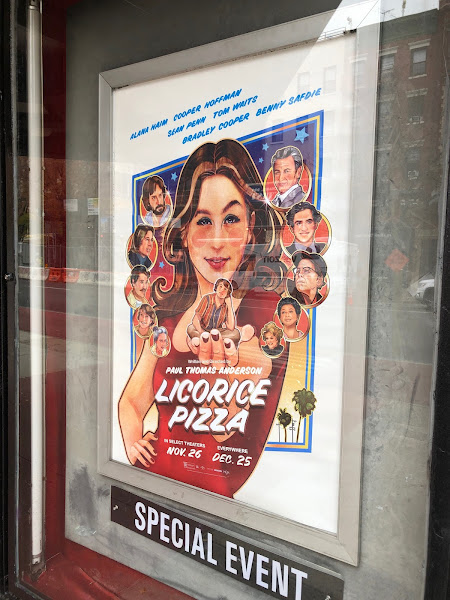
Serving up 'Licorice Pizza' this Thanksgiving

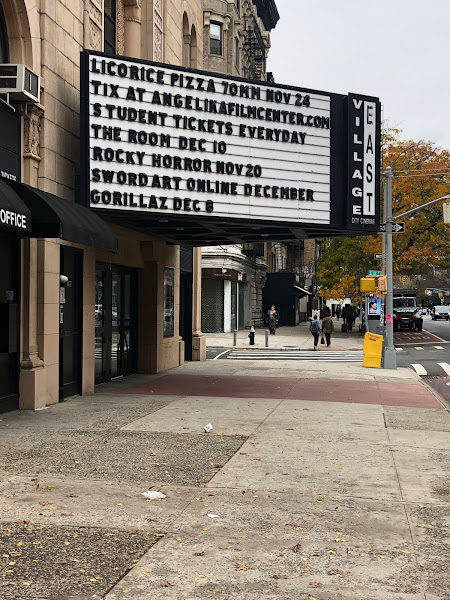
"Licorice Pizza," Paul Thomas Anderson's well-received coming-of-age film, opens this evening in 70mm at the Village East by Angelika on Second Avenue at 12th Street. (Given the 70mm format, it will be playing in the large auditorium — the Jaffe Art Theatre.) 

The thumbnail plot of the comedy-drama: "Alana Kane and Gary Valentine grow up, run around and fall in love in California's San Fernando Valley in the 1970s."
You can find ticket info here

And the trailer because it has Bowie's "Life on Mars" ...


Sunday, July 18, 2021

Thanks for the memories: Mars Bar closed 10 years ago today

True story: Mars Bar closed for good 10 years ago today on Second Avenue at First Street.

It's one of those kinda-seems-like-yesterday moments. I recall Goggla emailing me with the news...
The place was closing anyway to make way for the 12-story apartment building on the lot... But people thought that they had the rest of the summer of 2011 to enjoy the bar... or at least go to it.

However, a DOH visit did them in on July 18, 2011 — 54 violation points and mentions of every known type of fly. (Filth flies! Flesh flies!) And apparently, owner Hank Penza said the hell with it. And closed. 

For a time, the place was the greatest, strangest, dirtiest bar around the neighborhood. 

Here's what the Times had to say about Mars Bar once ... 
[I]n its prime it was perhaps the epitome of an East Village bar: menacing, dark and covered inside and out by graffiti, stickers and impromptu spray-painted artworks. Its forbidding restroom was an urban legend in and of itself.
It wasn't always that way ... per a different feature at the Times:
When the bar opened in 1984 ... the facade was gleaming. "We thought, 'Oh no, another sushi bar; there goes the neighborhood,'" said Jim Sizelove, who was part of the rowdy art scene called the Rivington School.
We can relive the bar here for a moment... in 2016, East Village-based filmmaker Jenny Woodward released an entertaining video short titled "Last Days of the Mars Bar," featuring interviews with Penza in the days leading up to the bar's closure.

Penza shares some colorful anecdotes (and perhaps tall tales), such as how the bar got its name and how the first art appeared on the bar's walls.

And Penza doesn't seem all that broken up about the end of days here.

"Fuck the bar. What am I, crazy? There's a beginning and an end. You hear? The Mars Bar will live forever and I'll die... I feel like there's a beginning and an end, and this is the end to another chapter in my life."

Penza died on Oct. 29, 2015. He was 82.


Here's a rather serene slice-of-Mars-Bar life showing a few people quietly sitting while David Bowie's "China Girl" plays on the jukebox. (Thanks Alex!) The video isn't dated ... it was uploaded in April 2012. It's aptly titled in part "Sweet Memories."

And don't forget "My Mars Bar Movie," the 87-minute documentary directed by the late Jonas Mekas of the nearby Anthology Film Archives.

The corner storefronts where Mars Bar stood were eventually demolished in late 2011/early 2012 to make way for the residential building called Jupiter 21. The corner space now houses a TD Bank and Kollectiv, "an urban retreat center" that features an herbal pharmacy and spa.

Anyway, thanks for the memories...

Tuesday, April 13, 2021

The artist who captured the sounds of East Village community gardens during the pandemic

Interview by Stacie Joy

Over the past year, Japanese artist Aki Onda has been visiting East Village community gardens and making field recordings for his project "Silence Prevails: East Village Community Gardens During the Pandemic." (Find the video here.)

Although now back in Japan, his project has recently gone live, and I was able to talk with him about his work, the inspiration behind the project and what’s next for him.
How did this project come about? Can you speak about its history? What made you choose the East Village for your project and what drew you to its community gardens?

I had an idea to do a project about the East Village community gardens for many years, although it took a long time, nearly two decades until I could work on it.

I started visiting NYC around the end of the 1990s and often stayed in the East Village. Back then, the area was home to artists and musicians. I had many friends and it was easy to hang out with them as well as sublet their apartment. I also loved watching avant-garde cinema at Anthology Film Archives, spent hundreds of hours there and met Jonas Mekas

His film "Reminiscences of a Journey to Lithuania," which I watched in Tokyo in 1996, had a tremendous impact on my life and art practice. So, it was a big deal for me to meet him. I would visit him at his office, and he would offer a drink to toast even if it was morning. Then, we would go to lunch at his usual Italian restaurant nearby, or Mars Bar.

Mekas organized two exhibitions of my photographs at the Courthouse Gallery in the basement. I donated a couple of large-size prints, and in return, he gave me a small print of his still image, which I still have. I met so many filmmakers while I spent my time at the AFA, and that helped me to absorb the Downtown culture. 

I found community gardens such as Albert’s Garden, Liz Christy Community Garden and 6 & B Garden around that time. Each had a very distinctive character and I sensed there was something to look into. My favorite was La Plaza Cultural, although the garden itself was rough around the edges and unpretentious, I found it a cheerful and festive space. 

Much later, I learned that the garden was founded by Carlos "Chino" Garcia and fellow local activists. Their associations with Buckminster Fuller and Gordon Matta-Clark, and the intersection between art and activism, was also inspiring.

My work, both sound- and visual-based, are often catalyzed by and structured around memories —personal, collective, historical. So, the community garden was the perfect subject, and slowly over the years, I kept visiting those gardens and learning historical backgrounds.  

Finally, I decided to embark on the project in 2019 and there was a strong twist. The original idea was to document the gardens by making field recordings, taking photos, and writing texts through the four seasons from spring 2020 to winter 2021. 

However, the pandemic swept the globe, and as of March 2020, New York was its epicenter and under full lockdown. GreenThumb made a decision to close all community gardens until further notice. Only members were allowed to enter, and my project ground to a halt. 

Nonetheless, I thought it could be interesting to document the gardens in these unprecedented times and began contacting individual gardens directly. In the end, I visited around 25 gardens in spring and summer 2020. Spending time in the gardens was somehow comforting. Those are sparsely populated outdoor spaces and there is low risk of catching the virus. 

And, if I look back to the past, those gardens started as "green oases" by local residents when the city was going through a severe financial crisis in the 1970s. This was the hardest hit area with many low-income residents, and buildings descended into ruin. In that traumatized neighborhood, there was a strong need to improve lives and find sources of hope. 

Somehow, in the midst of COVID-19 crisis, though it’s a different type of crisis, I saw a sort of cycle and thought it’s worth researching and how those garden spaces changed over the last half-century.

What was the most surprising thing that happened while you were recording?

When I was recording in Campos Community Garden, suddenly the wind blew, and the wind chimes hung from a tree, started making beautiful sounds and vibrations. It lasted until I pressed the stop button.

What were the reactions of others as you set up your equipment and recorded sound and images?

I use a handheld cassette recorder, only with a cheap attached microphone. It’s low-key and not like a high-end digital recorder with a fluffy expensive shotgun microphone attached to a long boom. The presence of my equipment is unobtrusive and people feel less uncomfortable. Taking photos is a bit different, and I usually ask them to get permission first as I don’t want them to feel uncomfortable.  

What’s next for you as an artist?

I'm preparing my solo exhibition titled "Letters from Dead Souls" at Portland Institute for Contemporary Art (PICA) in summer 2021, and as well as a few other upcoming exhibitions.  

As for the community garden project, luckily, I developed good relationships with core members of the community garden movement during my research. It's a deep subject and there is a lot more to dig into. I'm planning to continue the research for the next several years and expand the project for another opportunity. Let's see what comes with it...    
Image of the artist by Makiko Onda, all other images courtesy Aki Onda. You can keep up with the artist here.

Thursday, March 18, 2021

Juice Press founder bringing goodsugar to 1st Street

Marcus Antebi, the founder of Juice Press, is debuting a new pop-up concept called goodsugar™at 21 E. First St.

The plant-based, wellness cafe is now part of the Kollectiv space here between Second Avenue and the Bowery.

Here's more about the concept via a goodsugar rep:
• Moving beyond Juice Press, goodsugar will concentrate on eliminating single-use plastic. Products will be sold in reusable containers that can be returned for loyalty points, creating a closed-loop system we hope to see replicated by every cafe, restaurant, and juice bar in the world.

• Cold-pressed juice will be the freshest available anywhere, mixed and served on-demand rather than being stored for days in a fridge or HPP'd to extend shelf life for 3 months. 

• goodsugar offers organic vegan cooked foods, hot soups, fresh salads, and baked goods (free of gluten and refined sugars).

Kollectiv is "an urban retreat center" that features an herbal pharmacy and spa. Several juice cafes have given this space a shot dating to 2015, including NatureEs and the Alchemist's Kitchen. Kollectiv resides in the retail portion of Jupiter 21, the residential building that rose in 2012-2013 on the property that once housed Mars Bar and several other businesses.

Antebi opened the very first Juice Press one block to the east on First Street near First Avenue in 2010. While that location has closed, there are more than two dozen in the city. Antebi, who also has a goodsugar book and podcast, left Juice Press in 2019. 

Hours for goodsugar: Tuesday through Sunday from 10 a.m. to 6 p.m. Find the menu here. 

Friday, January 10, 2020

Heroes


David Bowie died on this day in 2016. The video here is a live version of "Life on Mars?" — one of my all-time favorite songs.

Wednesday, November 7, 2018

The Mars Bar lives! (in a penthouse suite in Times Square)


[Mars Bar photo courtesy of Karla and James Murray]

The dear old Mars Bar (RIP July 2011) over on Second Avenue and First Street has been immortalized in an unexpected place — a penthouse suite at the recently renovated Row NYC hotel on Eighth Avenue...

An EVG reader shared this find... behold the Penthouse Suite, with an entry featuring a life-sized Mars Bar storefront photo-printed on the wall...


[Click to go big]

Per the Row NYC website:

For a truly unforgettable stay, our Penthouse Suites are the ultimate uptown indulgence. Featuring one or two-bedroom options with separate living areas – along with a wet bar and kitchenette for entertaining – they hold our most-desired accommodations with top-notch city views and unparalleled touches to make your stay even more extraordinary.

Per the EVG reader: "If the guests only knew..."

If you're unfamiliar with the Mars Bar, well, it was a shithole — the best, really. (I write that with great affection.)


[Mars Bar photo by Eden from 2009]

It never reopened after a DOH inspector found 850 (or so) fruit flies, standing water, cracked walls and other unsanitary conditions in July 2011. What else was new?

Anyway, for upwards of $500, you can see the Mars Bar on your penthouse walls.

And Mars Bar owner Hank Penza was right. In an interview leading up to the closure, he said: "Fuck the bar. What am I, crazy? There's a beginning and an end. You hear? The Mars Bar will live forever and I'll die." (Penza died in October 2015 at age 82.)

The corner storefronts where Mars Bar stood were eventually demolished in late 2011/early 2012 to make way for the 12-story residential building Jupiter 21. The corner space now houses a TD Bank and The Alchemist's Kitchen, a cafe and shop that sells botanical medicines, herbal remedies and whole plant beauty products.

Previously on EV Grieve:
At the Mars Bar yesterday, the DOH found 850 fruit flies (or so)

Tuesday, November 29, 2016

The story behind one of the original CBGB awnings that's now up for auction


[Photo by Rainer Turim last winter outside the John Varvatos store on the Bowery]

According to research by Gothamist, there were three awnings during the life of CBGB at 315 Bowery. One was up from 1973 to 1987, another from 1987 to 2000 and the last until the club closed in 2006.

And where are they now? The most recent awning is at the Rock and Roll Hall Of Fame Museum in Cleveland. The original awning was allegedly in the possession of JFA (Jodie Foster's Army), who may have borrowed it after a show in the mid 1980s. And the third awning has been with East Village resident Drew Bushong since 2004.

Now Bushong is selling the awning at an auction at Sotheby's on Dec. 10, where it could potentially fetch between $25,000 and $35,000.

I asked Bushong, a former CBGB employee, about the awning and how it came to live in a box under his bed... and why he's selling it now.

How did you come into possession of the awning?

Totally randomly. I was walking home from Mars Bar on a sweaty night in 2004 and saw a cardboard box that was very familiar. It had sat above my desk for a year. I heard later it was just waiting for postage stamps to get to Cleveland's Rock and Roll Hall of Fame but was tossed out with a bunch of other crap in a cleaning rage.

So I saw it sticking half out of the trash in front of the club, and just threw it over my shoulder. I didn't really lose my shit about it until the next day when I woke up in bed next to it, torn open with the awning peeking out of it. Was quite an exciting hangover.

How do you know that it’s the real deal?

There's no doubt it's real. In my research, it's one of only three awnings that hung there. It went up as a replacement after punk rockers JFA are rumored to have stolen the first one.

It's a bit of a mess with paint splotches over some tags and it stinks a bit. It's been under my bed mostly since I found it.

Why are you selling it?

I had a beautiful baby girl, Thorn, 3-and-a-half-weeks ago and could use the space and money in better ways now. Dad ways now. Life's pretty exciting.

How long did you work at CBGB?

I worked as a door guy/security starting in late 2000 and was just working a couple shifts a week here and there. I had been there a few months and was getting pretty good at it. One boring night I ended up stopping a fight from happening and got stabbed in the neck in the process. I held the knifer down, under this awning actually, and called [owner] Hilly [Kristal] before calling the cops. I guess I handled the fight pretty well as I was promoted to management pretty soon after.

I have to say it was the best job I'll ever have. Best crew of people and employees and some of the most exciting shows I'll ever see in my life. Really got to be a part of something real special by working there.


[The middle awning is the one up for auction on Dec. 10]

Wednesday, June 22, 2016

Out and About in the East Village

In this ongoing feature, East Village-based photographer James Maher provides us with a quick snapshot of someone who lives and/or works in the East Village.


By James Maher
Name: Colette Pwakah
Occupation: Artist, Adventurer, and Part-Timer. Editor of Time Warp.
Location: Tompkins Square Park
Time: 3 pm on Friday, June 10

I was born and raised here: first near the Bowery, but I later moved further into the Lower East Side. My mom is from Syracuse and my dad is from Queens and Long Island. They moved to NYC in the early 1980s. I guess my dad always knew that he was meant to be in Manhattan, so he just had this drive to move here eventually. That was his goal.

Growing up in NYC was kind of fun and carefree. Most of my time was spent in the Tompkins playgrounds and the surrounding areas. I remember there were always a lot of strange characters around here. My dad would often point them out. He would say, ‘That kind of thing only happens here,’ or ‘only in New York.’ Living here, you'd learn to be more loving and accepting toward people, instead of hating or being afraid of people just because they look or act differently.

I was always into the punk aesthetic from a young age, and I liked that sort of music, but I didn’t know of any really good bands. Then in my late teens, I started doing more research and finding more genuine punk and rock 'n roll bands, like the real dank shit. Ramones, Misfits, the Clash, the Cramps, Johnny Thunders & the Heartbreakers, Richard Hell & the Voidoids, Leftover Crack...

Even as a kid, I heard about CBGBs and I always kind of fantasized about being able to go to shows there. In 2006, I think I was 12 or 13 so I was too young to even go to the matinee shows, and that was when they shut down. My little dream was crushed right there.

When I was little, there were still a lot of empty lots, a lot of garages, a lot of parking lots, empty spaces that didn’t have nasty glassy towers built on them. What really makes me go into this mental disconnect, is that so much is changing, faster than ever before, and its kind of heartbreaking sometimes. It’s hard to develop or maintain a sense of place when your surroundings are always looking different from month to month. What you knew and loved about your neighborhood — the familiar sights and imperfections — is being steadily destroyed and replaced.

One of the things I love most about New York City is that you can be anyone you want to be here. Everyone will accept you. That’s how it should be and that’s how it’s always been. If you want to reinvent yourself, go for it. That’s kind of a punk thing, too. You can be true to yourself and not have people judging you... and if they do, who the hell cares? Embracing punk music and ideologies has helped a lot in my life transition.

I studied wildlife biology in college. I was extremely depressed, anxious, and isolated, repeating endless cycles. It felt like being in prison. After a couple of years, I realized that no one really listens to scientists anymore. I began to question the system I was conforming to. Graduating high school, finishing college, getting a degree in some field, and hopefully getting a job... That's not realistic. It doesn't work for everyone. I really wanted to save natural places and wildlife — especially wolves and other predators.

I realized that there’s just so much corruption in politics that you can’t really do much as a scientist anymore. You might publish a study but no one really pays attention to it. Our global environment and ecosystems wouldn't be in such a mess if people in power would listen to the scientists or even common sense, for that matter. They only listen to the money. So, what’s the point of spending more than four years of my life studying and doing this work if it’s not even going to make a difference?

I left the city for maybe four months at a time each semester, and each time I came back to the city, the changes were very significant. It seems like time passes more quickly, here. You might leave for a week and it’s like a month has passed. It kind of freaked me out when I returned from my first semester and saw how the area around Mars Bar had changed in such little time. Astor Place suffered a similar fate. The streets are swarming with zombie-like people. It's like something outta the Twilight Zone.

In part 2 next week, Pwakah discusses launching her zine. "With Time Warp, I am trying to inspire people to act and actually do something instead of just being sad and resigned to the situation we’re in." (Find a PDF of the zine here.)

James Maher is a fine art and studio photographer based in the East Village. Find his website here.

Wednesday, April 27, 2016

Flashbacks: An afternoon sitting at the Mars Bar listening to David Bowie


Last week, we posted a new video short by East Village-based filmmaker Jenny Woodward titled "Last Days of the Mars Bar."

In the entertaining 8-minute video, Hank Penza, the owner of the Mars Bar who died last November, shared some history of the corner space on Second Avenue and East First Street.

Now our friend Alex found a 90-second clip on YouTube ... a rather serene slice-of-Mars-Bar life showing a few people quietly sitting while David Bowie's "China Girl" plays on the jukebox.

The video isn't dated ... it was uploaded in April 2012 — about nine months after the Mars Bar closed for good. It's aptly titled in part "Sweet Memories."

Wednesday, April 20, 2016

Video: 'Last Days at the Mars Bar'


East Village-based filmmaker Jenny Woodward has released an entertaining new video short titled "Last Days of the Mars Bar," featuring interviews with owner Hank Penza in the days leading up to the bar's closure in July 2011.

Penza shares some colorful anecdotes (and perhaps tall tales), such as how the bar got its name and how the first art appeared on the bar's walls on Second Avenue at East First Street.

And Penza doesn't seem all that broken up about the end of days here.

"Fuck the bar. What am I, crazy? There's a beginning and an end. You hear? The Mars Bar will live forever and I'll die... I feel like there's a beginning and an end, and this is the end to another chapter in my life."

Penza died last Oct. 29. He was 82.


Last Days at The Mars Bar from jenny woodward on Vimeo.


The corner storefronts where Mars Bar stood were eventually demolished in late 2011/early 2012 to make way for the 12-story residential building Jupiter 21. The corner space now houses a TD Bank and The Alchemist's Kitchen, a cafe and shop that sells botanical medicines, herbal remedies and whole plant beauty products.

H/T Goggla

Saturday, January 23, 2016

John Holmstrom's 'Punk' playlist


[John Holmstrom photo by Stacie Joy]

The exhibition celebrating the 40th anniversary of the first issue of Punk Magazine continues at Howl! Happening at 6 E. First St. between the Bowery and Second Avenue (through Jan. 30).

On Jan. 15, I interviewed founding editor (and East Village resident) John Holmstrom on East Village Radio. (Unfortunately, the show is not archived.) Holmstrom picked the playlist for the show, and included comments about each song... sharing it here now...

1. "You Drive Me Nervous" by the Alice Cooper Band
The first punk rock band I saw live and it changed my life forever...

2. "Kick Out The Jams" by Blue Oyster Cult
BOC was a truly twisted, crazed live heavy metal band that had Patti Smith and Helen Wheels as lyricists, and whose managers convinced CBS Records to sign The Dictators. And of course, the MC5 created punk rock by getting The Stooges signed to their record label.


3. "I Wanna Be Your Dog" by Iggy Pop and The Stooges
This was the prototype punk song, covered by so many punk rock bands over the years.


4. "Get Out of Denver" by Eddie and the Hot Rods
Eddie and the Hot Rods were the first band from England labeled "punk." Here's why. The pub rock scene was the biggest influence on the English punk scene.


5. "Riot In Cell Block No. 9 by Doctor Feelgood
Another "pub rock band from England. The Ramones opened for Dr. Feelgood at the Bottom Line in early 1976... Just the most amazing show.

6. "Bad Girls" by the New York Dolls
This was the first band I went to see at a small club: like Club 82, the drag club. Didn't like their fashion sense but love the music.


7. "My Generation" by The Patti Smith Group
Patti had a lot to do with putting CBGB on the map, she and her band made some great music, I need to give them props.

8. "(I Live For) Cars And Girls" by The Dictators
I picked up the first Dictators LP, loved it to death, played it for Ged Dunn Jr. and Mr. McNeil, and it inspired us to start a magazine. Oddly, enough, everyone in the band hates it!

9. "Judy Is a Punk" by the Ramones
I like the first Ramones best, it's very close to what they sounded like live at CBGB.


10. "New Rose" by The Damned
First punk band from England to release a record, tour the states, play at CBGB, etc. This was punk rock before it became formalized.


11. "Rocket USA" by Suicide
They often opened for the Ramones, and were the first-ever band to call themselves "punk." Even though people would now call this techno, Suicide was truly a punk rock band.

12. "I'm on E" by Blondie
I just love this song. It runs through my head whenever things are going bad and I am out of money, energy, whatever. Blondie were so much fun to work with, open to everything.


13. "Carbona Not Glue" by the Ramones
The best song by the Ramones, could have been a hit single if not for the lyrics.


14. "I Wanna Be Me" by the Sex Pistols
I always liked their B-sides better than the singles. The lyrics are brilliant, and aimed at people in the media (like me).

15. "Ready, Steady, Go" by Generation X
I always liked their debut album so much. "Purist" punks hated them: too pretty, too polished. In a way, they were the blueprint for pop-punk bands like Green Day, Blink 182, etc.

16. "Ain't Nothing To Do" by the Dead Boys
Great American punk rock band. Amazing live performances.


17. "Teenagers From Mars" by the Misfits
We planned a cover story on The Misfits, but couldn't do it: we were forced out of business unexpectedly.

18. "I Wanna Be Famous" by The Bullys
Great NYC punk band that still performs live.

19. "I'm a Boy" by The Bullys

20. "Against All Authority" by the Bullys
Brilliant song by them IMO.


Exhibition details:
Gallery Hours: Wednesday through Sunday, 11 a.m. - 6 p.m.
All events are free
Howl! Happening: An Arturo Vega Project, 6 E. First St. between the Bowery and Second Avenue

Previously on EV Grieve:
Q-and-A with John Holmstrom, founding editor of Punk Magazine

John Holmstrom on the CBGB movie and the East Village of 2013

Tuesday, November 17, 2015

To Hank

A photo posted by Lulu (@lulukayr) on


Someone decided to pay his or her respects to the late Hank Penza, who owned Mars Bar among many others during his life, here at the Centre-fuge-curated rotating outdoor gallery/construction trailer on East First Street between First Avenue and Second Avenue …

Previously on EV Grieve:
RIP Hank Penza

Tuesday, May 20, 2014

EV Grieve Etc.: Mourning Edition


[This morning via an East 14th Street resident]

Beat poet Jack Micheline and the Mars Bar (Jeremiah's Vanishing New York)

A look at Ian Schrager's incoming Public hotel on Chrystie Street (BoweryBoogie)

100 years of Russ & Daughters on the Lower East Side (Eater)

An update on the endangered Children's Magical Garden (The Lo-Down)

Some video from the Dance Parade on Saturday (GammaBlog)

Visiting the "gallery haven" of the Lower East Side (Crain's)

The overwhelming persistence of neighborhood poverty (The Atlantic/CityLab)

Video: A day in the life of NYC's wonderful, endangered libraries (BoingBoing)

Looping the loop again in Coney Island (Amusing the Zillion)


[Tompkins Square Park this morning]

Monday, May 12, 2014

Will the new Mars Bar be another location of The Pink Elephant?


So you know that Mars Bar owner Hank Penza (along with a new group of partners) is returning to his former home at 11-17 Second Ave., now the luxury Jupiter 21 building.

The mysterious cafe-bar-club concept will be housed at 21 E. First St. adjacent to the Jupiter 21 residential entrance and the new TD Bank branch.

There's a notice on the front door about tonight's CB3/SLA committee meeting, where Penza and his new partners Alain Palinsky, a co-founder of Juice Press, Chris Reda, an owner of The Griffin in the Meatpacking District, and Robert Montwaid, an owner of the club The Pink Elephant, are on the agenda.


Here's a look at the inside … reportedly a 4,456 basement and ground floor space …


And we noticed some architectural plans on a table inside…


We'll flip the photo to make it easier to read… according to these plans, the place will be called The Pink Elephant.


This could just be a working title for the place. According to the paperwork on file with CB3, the proposed hours of this new venture are 6 a.m.-4 a.m. Monday through Friday; 8 a.m.-4 a.m. on Saturday and Sunday. The application also lists that there will be 15 tables good for 80 seats ... with one bar featuring eight seats. The new establishment will employ 15-20 people. And the "All Star Security Services will be providing security guards" — "3-4 nightly."

We don't know much, if anything, about The Pink Elephant, currently located in New York at 40 W. Eighth St. Here's how they describe themselves:

The Pink Elephant is a world renowned brand geared towards high energy entertainment and exuberance for life. With locations in the US, Brazil and Mexico, the brand has come to be a favorite of jet setters, celebrities, socialites and trendsetters alike because of the level of service, sophistication, and overall entertainment experience.

Meanwhile, it remains to be seen what this place will be like during the day … with the 6 a.m. opening times … and the Juice Press connection.

Previously on EV Grieve:
A few more details about Mars Bar 2.0, which doesn't sound very Mars Bar-ish at all